.svg)

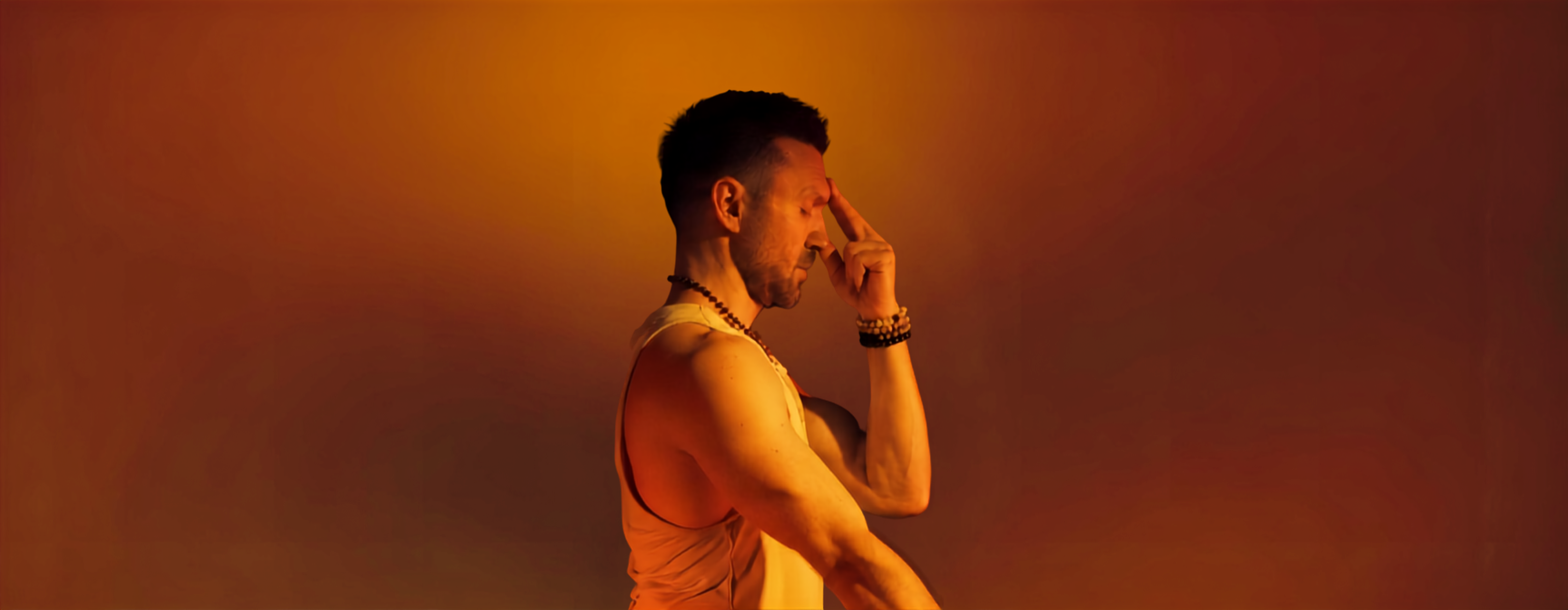
Ask most people what an advanced yogi looks like and they'll describe a shape — a forearm stand on a cliff's edge, a full lotus folded into a handstand. Something you could photograph.
The tradition wouldn't recognize that answer.
On the first day of his 200-hour training at Blooming Lotus Yoga in Ubud, Bali, our founder Adam wrote one line in his journal that quietly rearranged everything:
Advanced yoga is meditation. Asana is a purification process that lets you go deeper into a meditative state.
Not a footnote to the “real” work of the poses. The definition itself.
The word was never about the body
“Yoga” comes from the Sanskrit yuj — to yoke, to unite, to join. The practice is named after its destination, and the destination isn't a pose. It's the reunion of you with yourself: quieting the performing, comparing mind and remembering what's underneath it.
The classical texts put it even more simply: yoga chitta vritti nirodhah — yoga is the stilling of the fluctuations of the mind. Silence is your natural state. Everything else is weather.
Which means the first time you sat down, closed your eyes, and just watched your breath without needing it to be anything — you were doing yoga. Maybe more of it than in the hour of poses before.
Asana is one of eight limbs — and it means “stillness of body”
Patanjali's path has eight limbs, listed in order for a reason:
- Yama — how you treat others
- Niyama — how you treat yourself
- Asana — stillness of body
- Pranayama — awareness of breath
- Pratyahara — turning inward
- Dharana — focus
- Dhyana — meditation
- Samadhi — absorption
Look where the postures sit. Third of eight. And look at the translation: stillness of body, not movement of it. The older texts describe only a handful of asanas, and more than half are seated. The goal, as Adam was taught it, is to sit comfortably in one posture — around forty-eight minutes — in complete stillness. Every other shape exists to get the body ready for that.
The postures were the antechamber. The sitting was the room. Somewhere along the way, we moved into the antechamber and started decorating.
What happened on the way west
This wasn't anyone's fault — it was translation. As yoga traveled west, teachers simplified it so it could be understood, which was generous, and which also cracked the door for the spiritual heart to slip out. Then the market showed up: yoga for abs, yoga for weight loss, yoga to tone your bum. The challenge for our generation is a new one — finding the gems in the commercial pile.
But preparation is not the lesser thing
Here's where a truth like this usually gets turned into a weapon, so let's be careful.
Saying advanced yoga is meditation is not saying your practice doesn't count. It is not permission for anyone to look down from a meditation cushion at a room full of people moving. The tradition is far too humble for that, and so are we.
Asana is a purification process — and purification isn't a warm-up you get past. It's the work. The body holds what the mind won't look at, and long holds and deep folds surface it, in the same sideways way dreams do. You can't sit still in a body that's never been asked to be still. You can't watch a breath you've never learned to feel.
So the movement is real, and it's sacred, and it's also for something.
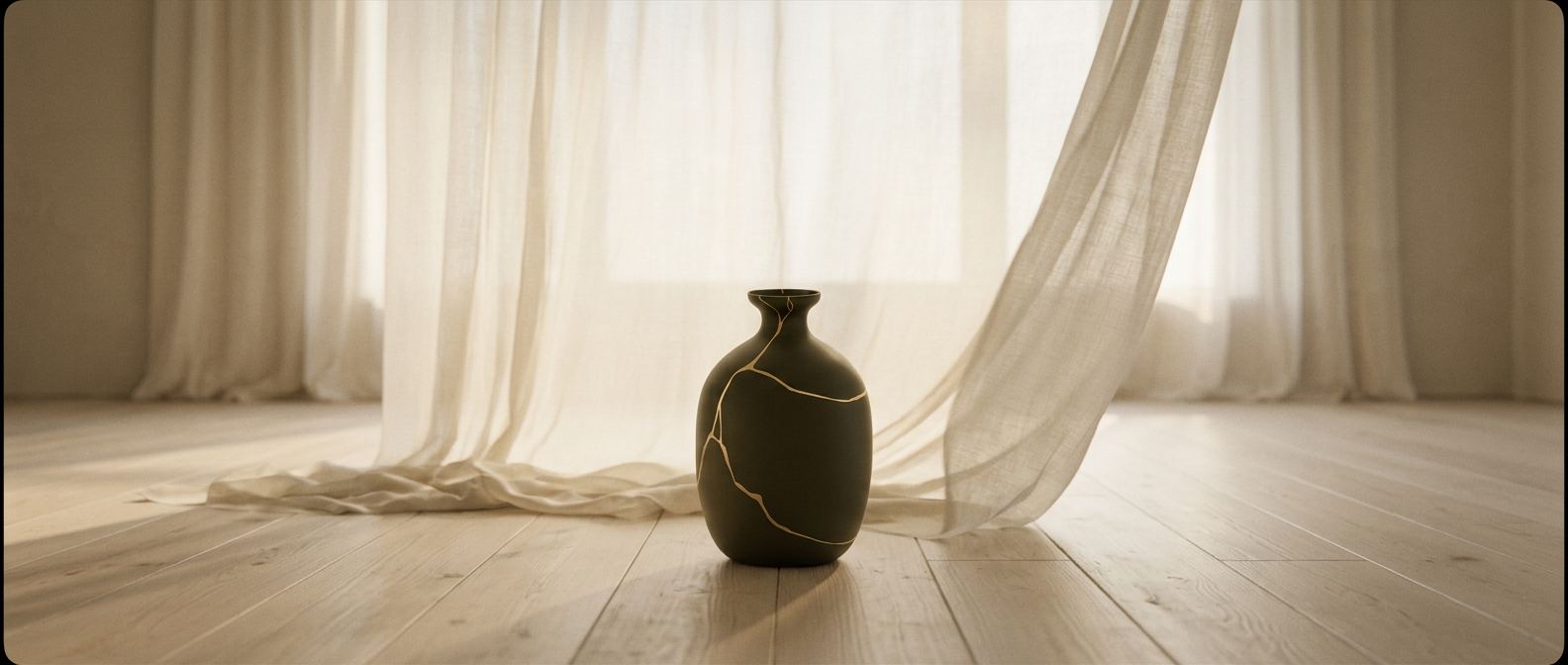
This is the same idea that gave our studio its name. In kintsugi, the break isn't the shameful part you hide before the bowl can be called beautiful — the gold gets poured straight into the fracture, and the repair becomes the most luminous line on the piece. Your preparation is like that. The restless years, the sore hips, the class you left early — none of it is the ugly prelude to a “real” practice later. It's the practice. It's where the gold goes.
What this changes in your next class
Practically, almost nothing. And everything.
You'll still move. You'll still be offered the pose, the gentler option under it, and permission to take either. But the frame shifts:
- The shape isn't the achievement. Notice what it does to your attention. That's the measurement.
- Stay for the silence. Savasana and the closing meditation aren't the cool-down. They're the whole point the rest of the hour was clearing a path toward.
- Give the breath your full attention once. Not a technique — just one honest cycle, watched start to finish. That's the entire path in miniature.
- Let it be boring. Stillness isn't dramatic. It doesn't photograph. It's also the only part of this that changes anything.
You don't need to sit for forty-eight minutes to belong here. You don't need to be flexible, or calm, or convinced. You just need to be willing to stop, for a moment, in a room built to hold that.
The postures will prepare you. The stillness will meet you. Come sit with us.
.svg)

